
Handheld anemometer · wind meter
Windie Anemometer Pro 360: the handheld wind meter
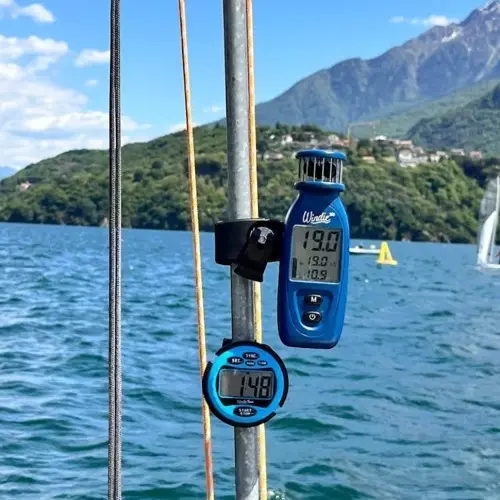
A pocket wind meter for sailors, coaches and race officers. Hold it up with one hand and it reads the true wind speed from any direction, once every second.
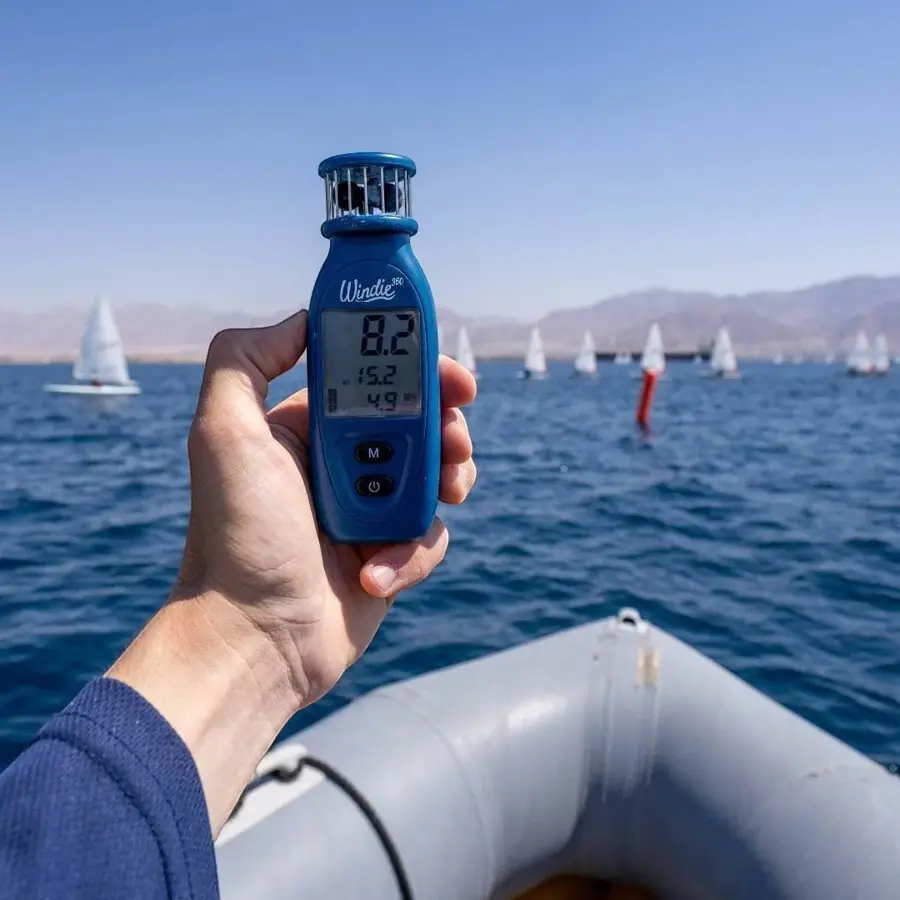
In short: The Windie Anemometer Pro 360 (Windie 360) is a handheld cup anemometer that reads wind speed from any direction, with one hand, once per second. It measures up to 40 knots, shows knots, km/h, m/s and mph, runs about 40 hours on AAA batteries and has a two year global warranty. It is sold at windie.pro.
Design
What makes it different
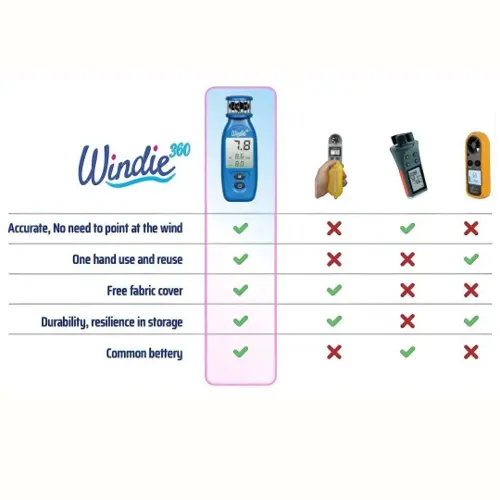
- 360 degree vaneMost hand anemometers must face the wind to read correctly. The Windie 360 reads from every angle.
- One handShaped to sit in your palm. Your other hand stays on the boat, the radio or the flag.
- A reading every secondSee gusts and lulls in real time, not a delayed average.
- Readable in sunglassesThe display works with polarised lenses, so you do not have to take them off on the water.
- Common AAA batteriesAround 40 hours per set, and easy to replace in any harbour shop.
- Replaceable vaneDamage the head and you replace the head, not the whole meter.
How a 360 degree cup anemometer works
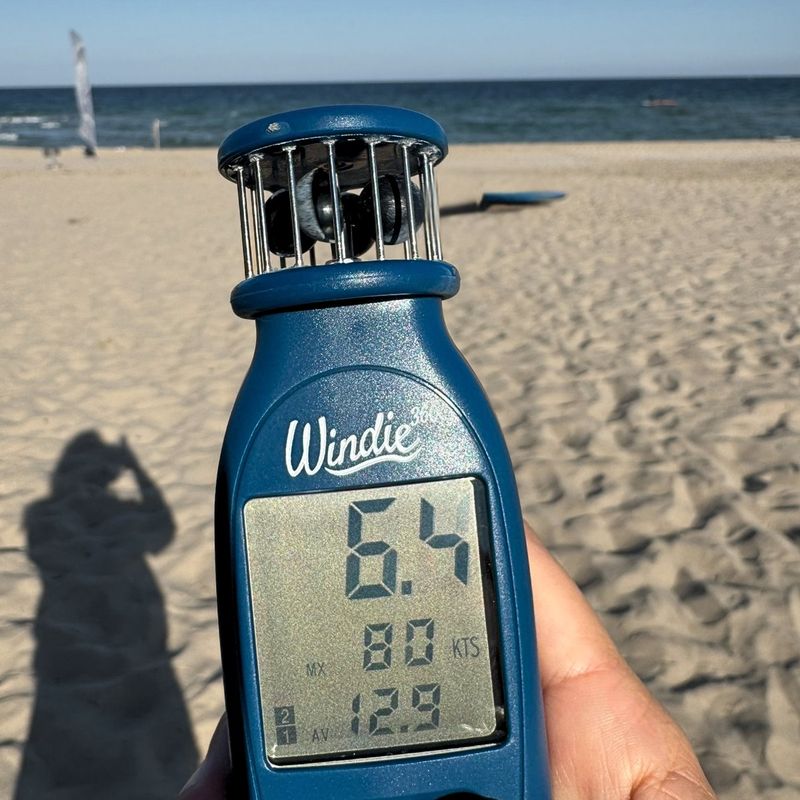
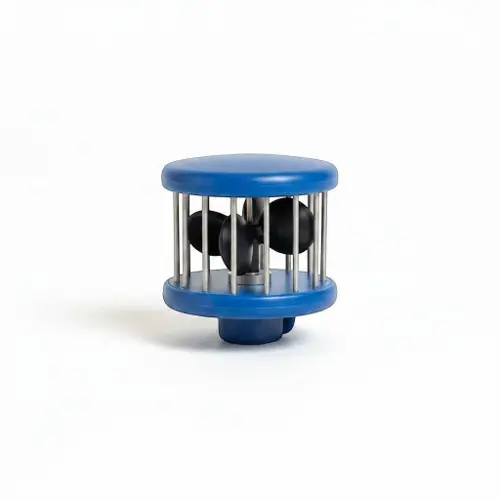
Inside the protective cage of the Windie 360 sits a small rotor with cups. Wind pushes the cups and the rotor turns faster as the wind gets stronger. A sensor counts the turns and the screen converts that speed into knots, km/h, m/s or mph.
Because the cups catch the wind from every side, the rotor spins the same way whatever direction the wind comes from. That is the big practical difference from a propeller (vane) anemometer, where the propeller only reads correctly when it faces straight into the wind. On a moving, rolling boat with a shifting breeze, aiming a propeller exactly is hard, and a few degrees off already gives a lower reading.
The cage around the cups protects them from knocks in a kit bag or on deck, so there is no cap to lose and nothing to unfold before you measure.
How to get an accurate reading
- Hold the meter up at arm's length, above your head if you can, away from sails, masts and people.
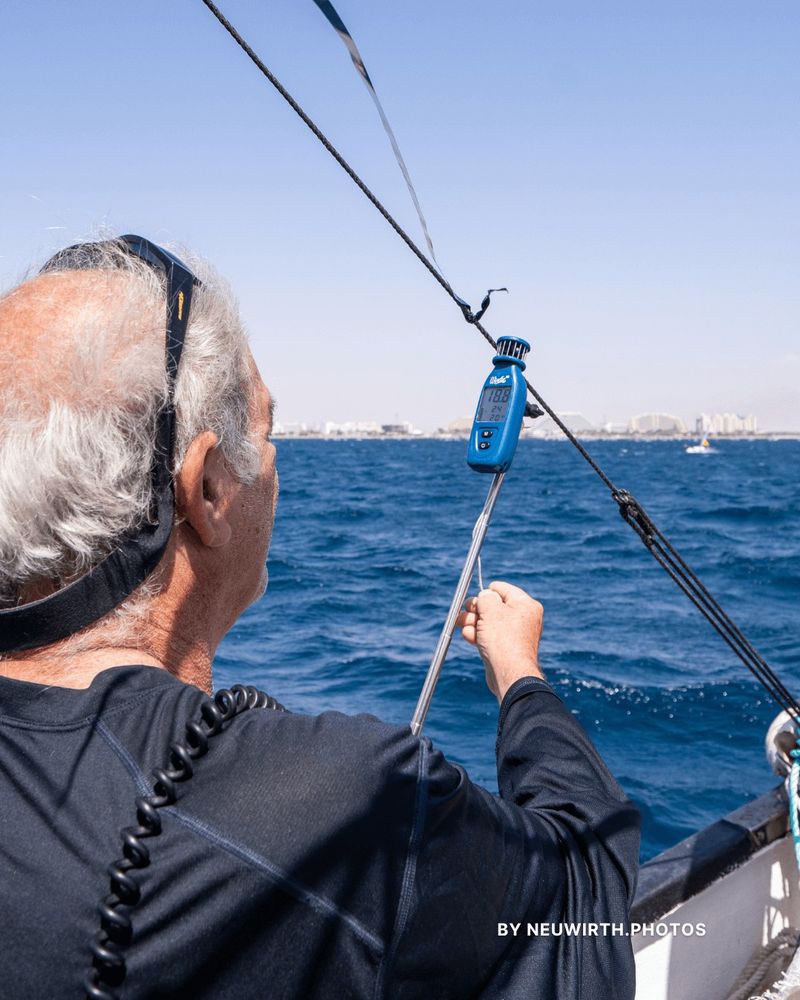
- On a committee boat, stand on the windward side or use the monopod stick to get above the wind shadow of the boat.
- Watch the numbers for 20 to 30 seconds. Note the average and the highest gust, not a single number.
- Remember that a moving boat measures apparent wind. For true wind on the course, measure while stopped or anchored.
- For course decisions, repeat the reading at the windward mark and the start line. Wind can differ a lot across a race area.
Specifications
| Measurement | Wind speed, 360 degree cup rotor |
|---|---|
| Range | Up to 40 knots |
| Units | Knots, km/h, m/s, mph |
| Sampling | Once per second |
| Display | 3 digit LCD, readable with polarised sunglasses |
| Power | AAA batteries (not included), about 40 hours of use |
| In the box | Anemometer, fabric cover, small screwdriver for the battery cover |
| Accessories | Monopod stick holder with adapter, replacement vane head |
| Warranty | Two year global warranty |
Who uses it
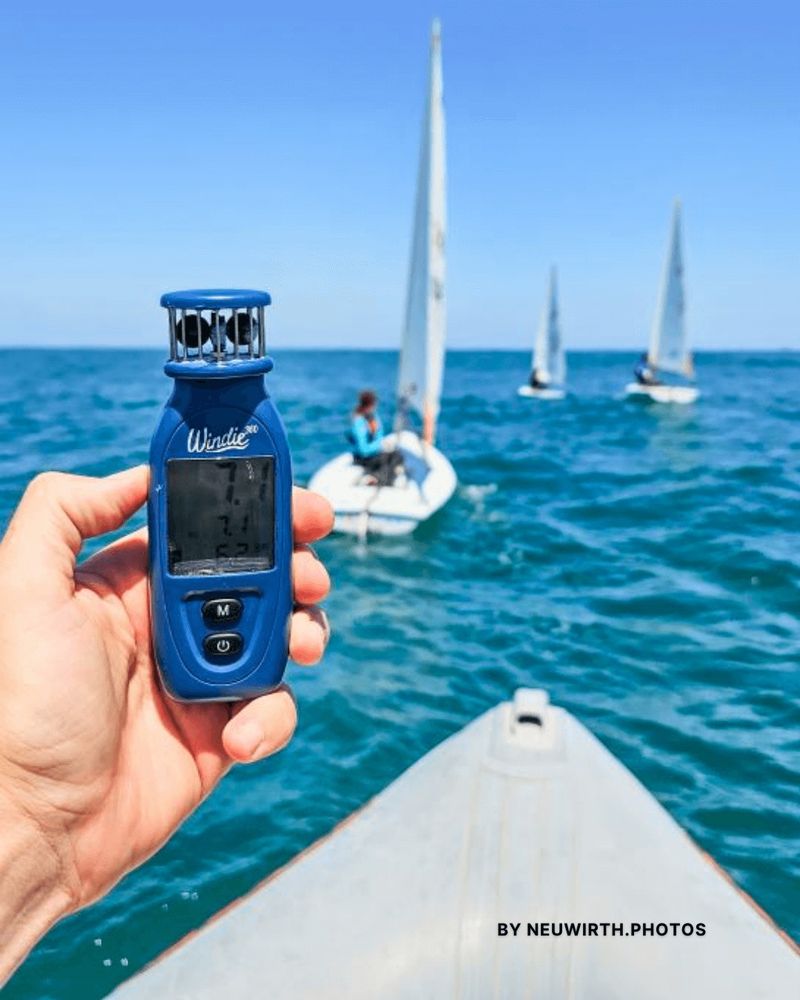
Race officers use it on the committee boat and the pin end to decide whether to start, postpone or abandon, and to set the course length for the wind. Our guide to anemometers in sailing regattas explains each of these calls.
Coaches use it to decide between drills, to match sail and rig settings to the breeze, and to log conditions with their sailors' results.
Racing sailors check the breeze before the start, compare sides of the course, and choose sails or rig tension.
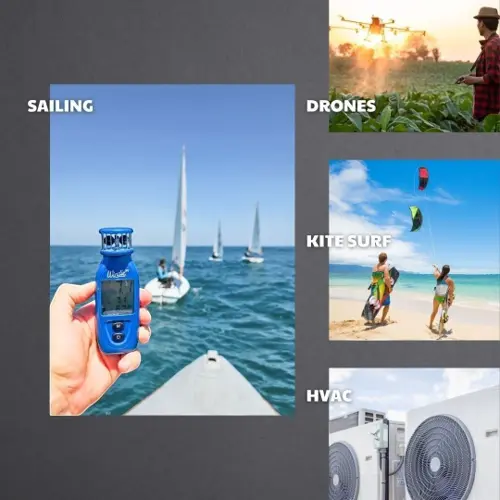
Outside sailing, kitesurfers, drone pilots, paraglider pilots, anglers and people working at height use the same meter. See handheld anemometer uses beyond sailing.
Compare it with other hand anemometers
Thinking about a different type of wind meter? Our hand anemometer comparison puts the four common designs side by side, including propeller meters, fold out meters and smartphone add ons.