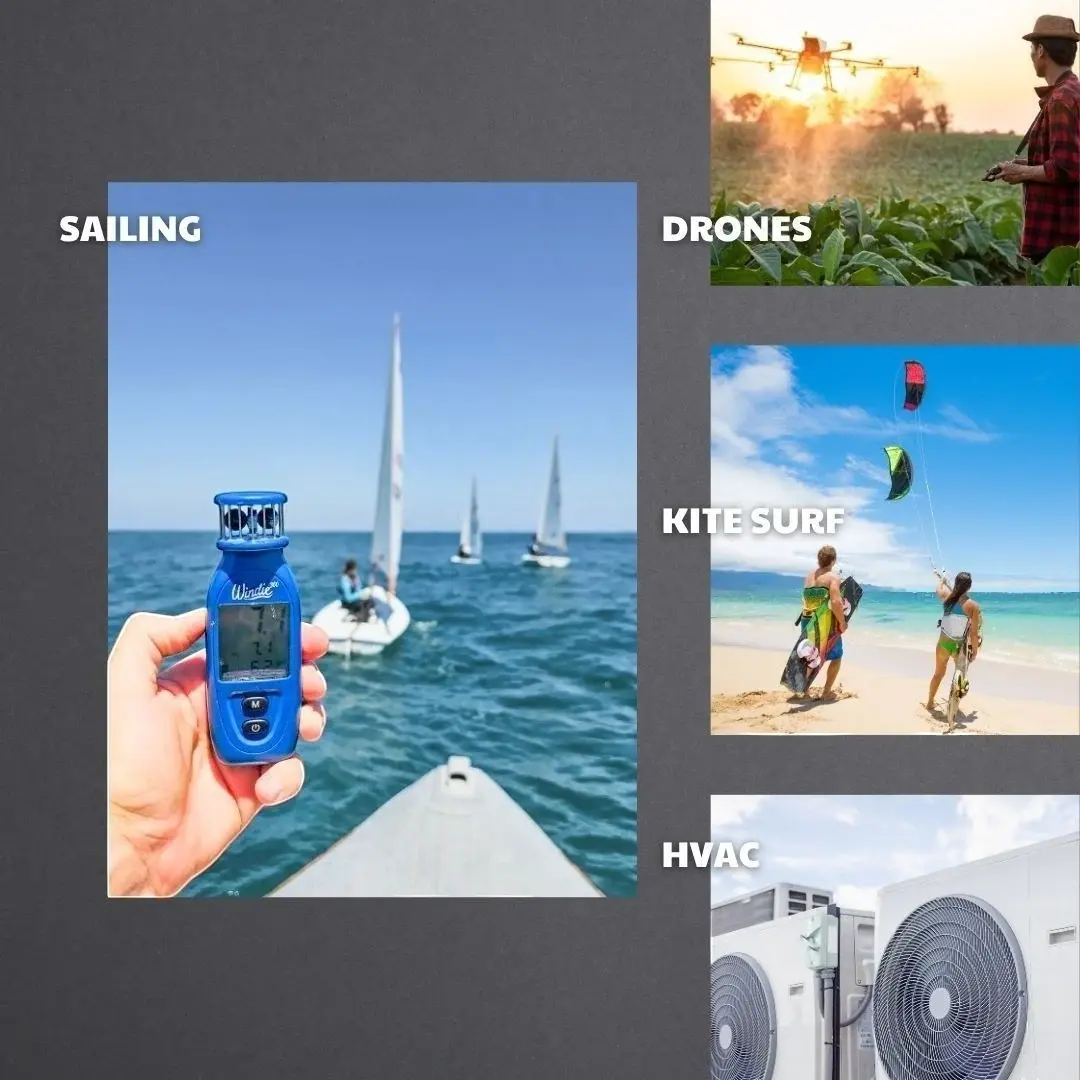
A pocket anemometer is not only a sailing tool. Anyone whose plans depend on the wind can use one to make faster and safer decisions.
Here are the most common uses outside sailing, with a practical tip for each.
Kitesurfing and windsurfing
Choosing the right kite or sail size is all about wind speed. Measure on the beach before you rig, upwind of buildings and dunes. Note the gusts: a session that starts at 15 knots with 22 knot gusts needs a different setup than steady 15. Many schools set a maximum wind for lessons, and a handheld reading makes that call clear.
Drones
Most consumer drones list a maximum wind resistance, often around 20 to 25 knots at flight height. Wind is stronger higher up than at ground level, so a ground reading close to that limit is a reason to wait. Check before take off and between batteries.
Paragliding and hang gliding
Pilots check wind speed at launch to decide whether conditions are inside their wing's and their own limits. A handheld meter shows gusts that wind socks only hint at.
Golf
Wind changes club choice and aim. Many golfers use a pocket anemometer in practice to learn how much a 10 knot headwind costs them. Check your competition rules before using measuring devices during a round.
Fishing and boating
Anglers on small boats and kayaks use wind readings to decide whether to go out and how to drift. Compare your reading with the forecast to see if conditions are building.
Work at height, cranes and spraying
Work at height, crane lifts, scaffolding and crop spraying often have wind limits in safety procedures. A handheld anemometer gives a quick spot check. For formal safety compliance, always follow your site's procedures and use the instrument they require.
Outdoor events and photography
Organisers of outdoor events check wind before setting up gazebos, banners and stages. Photographers and filmmakers check it before flying or rigging lights.
Which meter works best outside sailing?
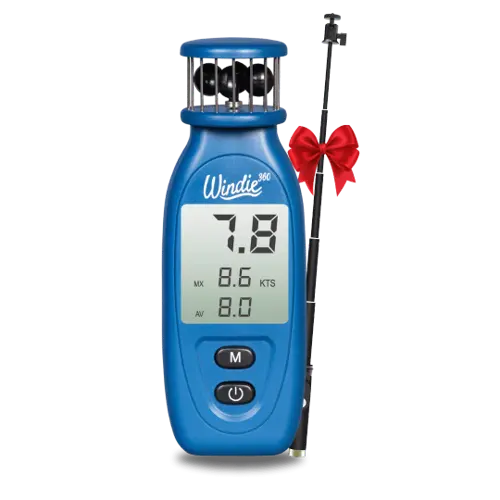
In all of these situations you are often moving, holding something, or unsure where the wind comes from. A 360 degree meter that works with one hand, like the Windie 360, is simply faster to use. If you need to convert units for a drone spec sheet or a safety form, use the wind speed converter.