In short: Most small DJI drones are rated for 10.7 to 12 m/s of wind (about 21 to 23 knots); the DJI Neo for 8 m/s. For a comfortable flight, keep the wind at flight height below about two thirds of the rating, roughly 7 m/s or 14 knots for a DJI Mini. Wind is usually stronger at flight height than on the ground, so measure the gusts before take off.
Wind is the most common reason drones drift off, drain their batteries or struggle to come home. Here is how to read your drone's wind rating and decide in a minute whether to fly.
Wind limits of popular drones
Manufacturers publish a maximum wind speed resistance. DJI often adds a "level", which is the Beaufort force. These are the figures from DJI's own spec pages for common models, checked in October 2026. Firmware and versions differ, so always check your own manual.
| Drone | Max wind resistance | Knots / mph |
|---|---|---|
| DJI Neo | 8 m/s (Level 4) | about 16 kn / 18 mph |
| DJI Mini 4 Pro, Mini 3, Mini 3 Pro, Mini 4K | 10.7 m/s (Level 5) | about 21 kn / 24 mph |
| DJI Avata 2 | 10.7 m/s (Level 5) | about 21 kn / 24 mph |
| DJI Air 3, Air 3S | 12 m/s | about 23 kn / 27 mph |
| DJI Mavic 3 Pro | 12 m/s | about 23 kn / 27 mph |
"Level 5" is the top of Beaufort force 5, a fresh breeze of 8.0 to 10.7 m/s (17 to 21 knots). Level 4 is 5.5 to 7.9 m/s (11 to 16 knots). The rating is the most the drone can hold position in. It is not a comfortable flying wind.
A simple rule: stay at two thirds of the limit
Keep the wind at flight height to no more than about two thirds of your drone's rating. For a Mini rated at 10.7 m/s, that is about 7 m/s or 14 knots. This is our rule of thumb, not a DJI figure, but it matches what experienced pilots describe: above it, the drone tilts hard to hold position, the battery drains faster and the return leg can take much longer than the way out.
Wind is stronger up high
Near the ground the wind is slowed by grass, trees and buildings. Higher up it is faster. With the usual engineering formula, 10 knots at head height becomes about 16 knots at 120 m over open water and about 18 knots over open land. Pilots on drone forums often report the wind at height as two or three times the ground wind, especially near hills, cliffs and buildings.
So if your ground reading is already near two thirds of your limit, wait, or keep the flight low and short.
Pre flight wind check in 60 seconds
- Stand in an open spot, away from cars, walls and trees, and hold the anemometer up high.
- Read for 30 seconds. Note the average and the highest gust.
- Compare the gust, not the average, with two thirds of your drone's limit.
- Take off and hover at a few metres. Watch how much the drone tilts to hold position.
- Fly the first leg into the wind, so the way home is downwind.
- Land with a good battery reserve. Many pilots keep about 30% for the return in wind.
- Check again between batteries. Sea breezes and mountain winds change through the day.
Signs the wind is too strong
- A high wind warning in the DJI Fly app.
- The drone tilts hard or drifts while hovering.
- Ground speed drops a lot when flying into the wind.
- Battery percentage falls much faster than usual.
If you cannot make headway, fly lower, where the wind is weaker, and use cover such as a tree line. Return to Home is a backup, not a plan.
Forecasts vs a meter in your hand
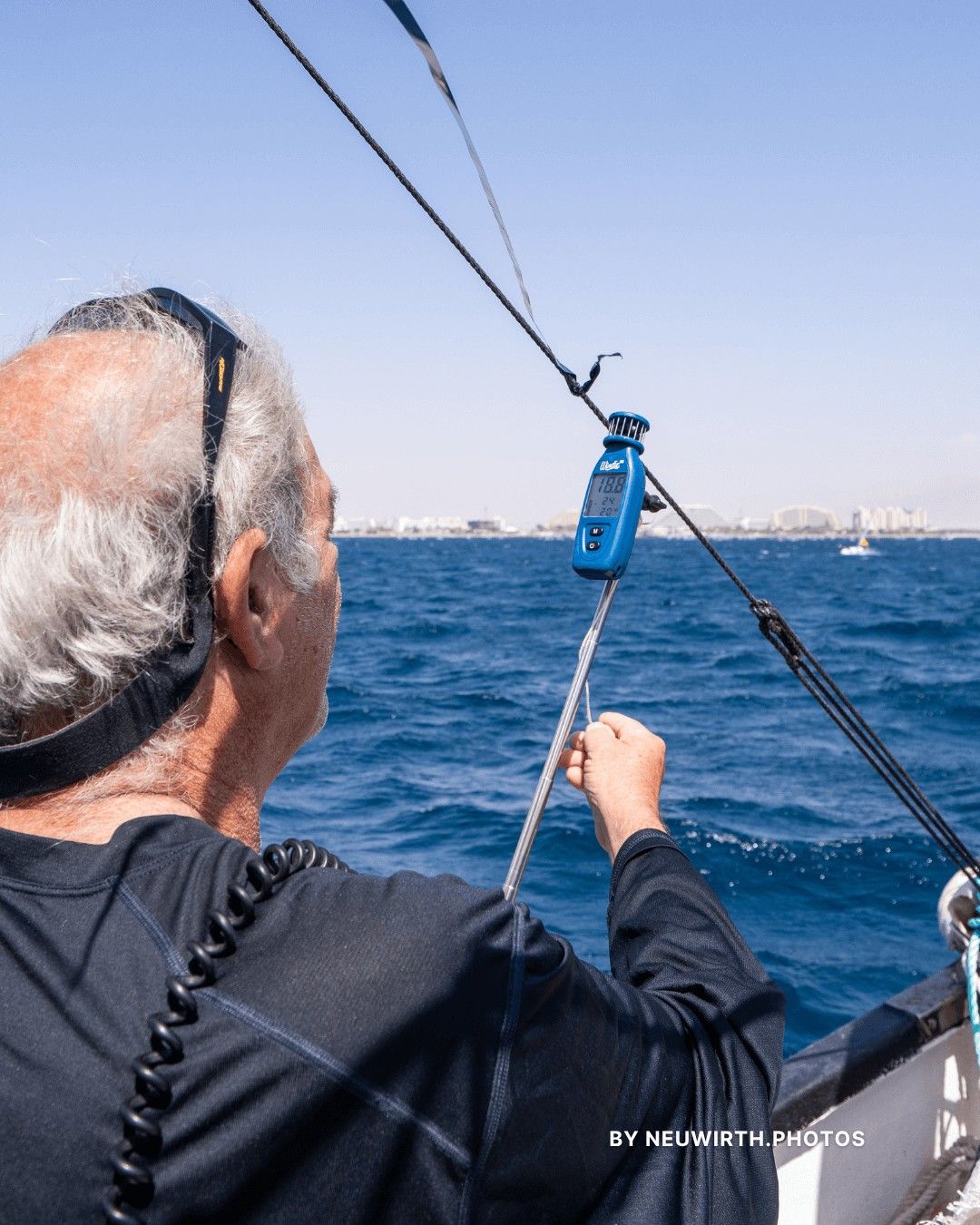
Weather apps give a regional forecast, often for 10 m above open ground. Apps made for pilots also estimate the wind at 50 or 100 m. Both are useful for planning. What they cannot see is the gust at your take off spot, next to this cliff, this building or this beach. A small handheld anemometer gives that number in half a minute.
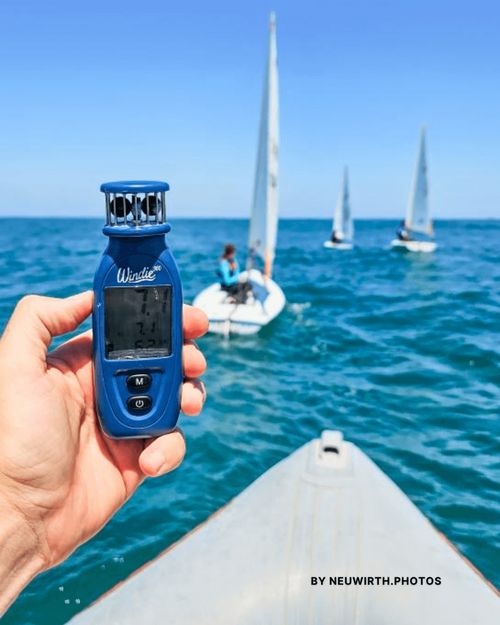
A cup meter like the Windie 360 reads from any direction, so you do not need to find the wind first, and it shows m/s, the unit in most drone spec sheets. To switch units, use the wind speed converter.