In short: For a 75 kg kitesurfer, a good starting point is a 12 m kite in 15 knots, about 10 m in 18 knots and 7 to 9 m in 20 to 25 knots. Wing foilers start around 5.5 to 6 m in 12 to 15 knots and 3.5 to 4.5 m in 20 to 25 knots. Heavier riders go up a size, lighter riders down. Rig for the gusts, and measure the wind on the beach before you pump up.
The right size depends on wind speed, your weight, your board and your skill. Start with these charts, then check the real wind on your beach before you rig.
Kite and wing size at a glance
Kitesurf kite size by wind speed
This is a starting point for a rider of about 75 kg on a standard twin tip. We compared it with published charts from kite brands and schools, which agree within a size or so.
| Wind (knots) | Wind (m/s) | Kite size, 75 kg rider |
|---|---|---|
| 12 to 15 | 6 to 8 | 12 to 14 m |
| 15 to 20 | 8 to 10 | 10 to 12 m |
| 20 to 25 | 10 to 13 | 7 to 9 m |
| 25 to 30 | 13 to 15 | 6 to 8 m |
| 30 and more | 15 and more | 5 to 6 m, experienced riders only |
A rule of thumb often shared on kite forums: kite size (m²) ≈ rider weight (kg) ÷ wind (knots) × 2.2. For 75 kg in 15 knots that gives about 11 m, in 20 knots about 8 m. Treat it as a rough guide; brands do not publish it, and skill, board and gustiness change the answer.
What changes the size
| Factor | Effect |
|---|---|
| Bigger or wider board | Gets going earlier. Riders often use up to about 20% less kite. |
| Foil board | Needs a much smaller kite for the same wind. |
| Longer lines | More power, roughly like 1 to 2 m more kite. |
| Cold air | Denser air pulls harder at the same wind speed. |
| Skill | Experienced riders often ride 2 to 3 m smaller than beginners. |
For a first set of kites, riders on forums most often suggest three sizes about two square metres apart, such as 7, 9 and 11 m for an average rider, and buying the middle size first.
Wing foil size by wind speed
For a rider of about 75 kg with an intermediate setup, the chart above gives starting sizes. Most riders need 12 to 15 knots to foil comfortably; under 10 knots is hard for learners. Schools and brands often name roughly 13 to 20 knots as good learning wind.
A quick comparison riders use: a wing has roughly the pull of a kite twice its size, so a 5 m wing is a bit like a 10 m kite. The usual first wing mistake is buying it too small and then waiting for 20 knot days.
Gusts matter more than the average
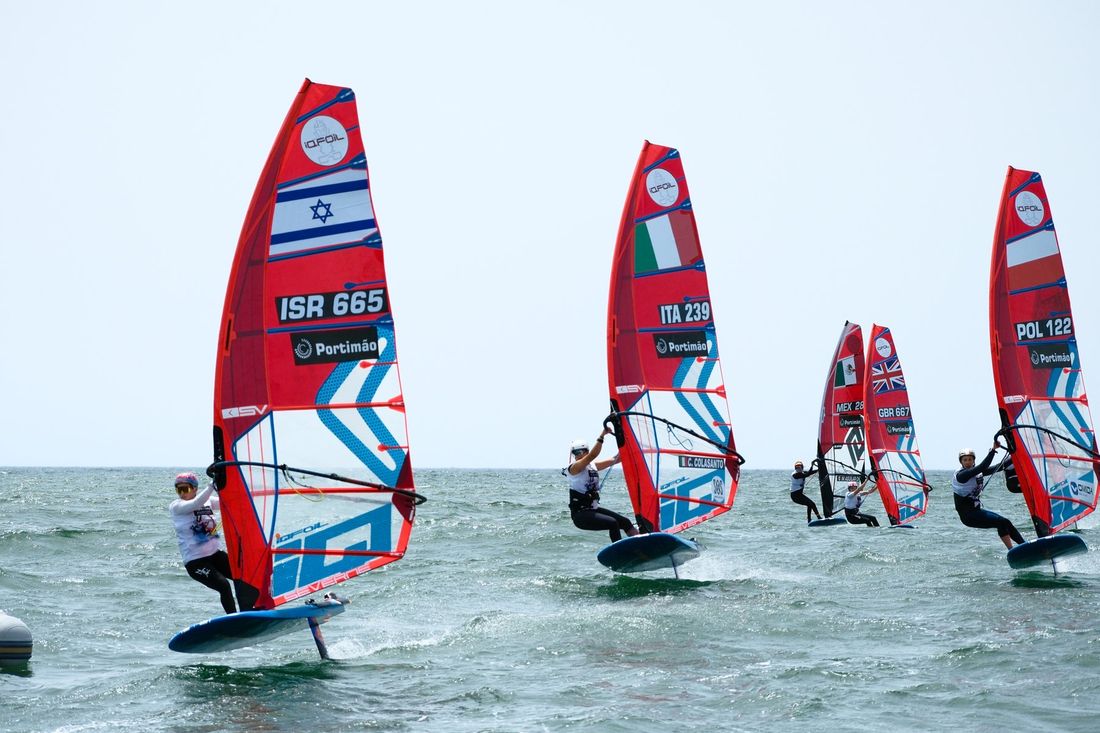
Rig for the gusts you can handle, not for the lulls. A day of 15 knots with gusts to 25 is harder than a steady 20. If the gusts are more than about 10 knots above the lulls, rig smaller and stay closer to shore.
How to measure wind on the beach
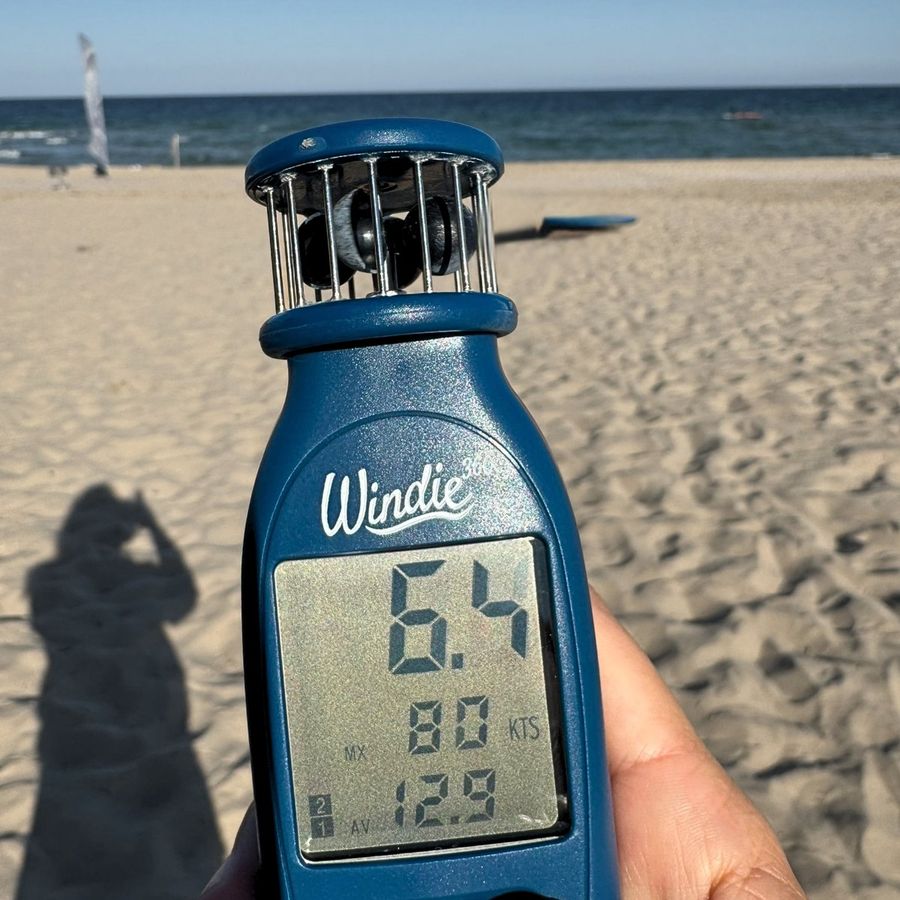
- Walk to the water's edge, upwind of buildings, dunes, cars and people.
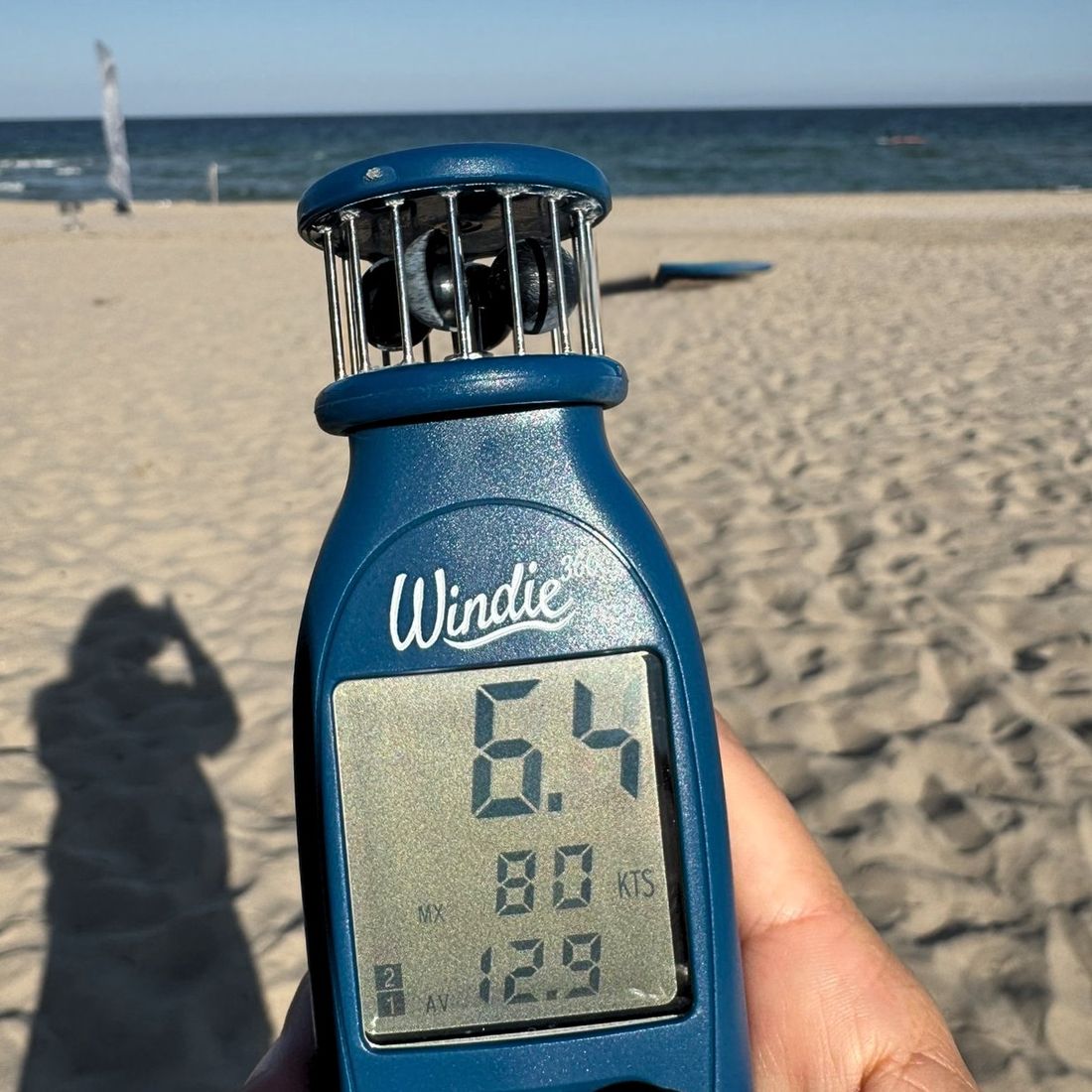
- Hold the anemometer up at arm's length for 30 seconds.
- Note the lowest and highest reading, not just one number.
- Remember the wind a little way out can be a few knots stronger than on the sand.
- Compare with the forecast and the local station to see if the wind is building or dropping.
- Measure again before your second session; sea breezes change through the day.
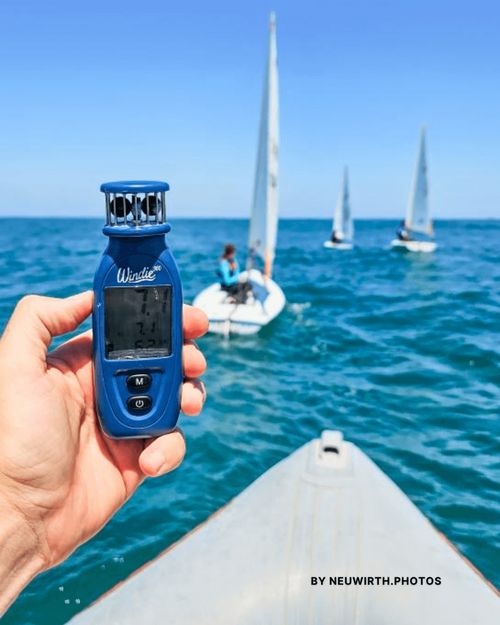
A cup anemometer like the Windie 360 reads from any direction, so you can hold it up with one hand while the other holds your lines. It reads up to 40 knots, well past where most riders pack up.
Safety notes
- Offshore wind, blowing from land to sea, is gusty and pushes you away from the beach. Schools do not teach in it. Know the direction, not just the speed.
- Schools set their own limits for beginner lessons, usually somewhere between about 22 and 30 knots.
- When in doubt, rig smaller. It is easier to wait for more wind on the beach than to fight too much on the water.