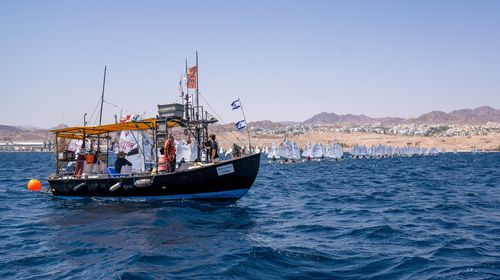
A fair race depends on a well equipped race committee. Each boat in the team has a different job, and each job needs a slightly different set of tools.
Here is what the committee boat, pin end boat, mark boats and coach boats typically carry, and what to look for when you choose them.
On the committee boat
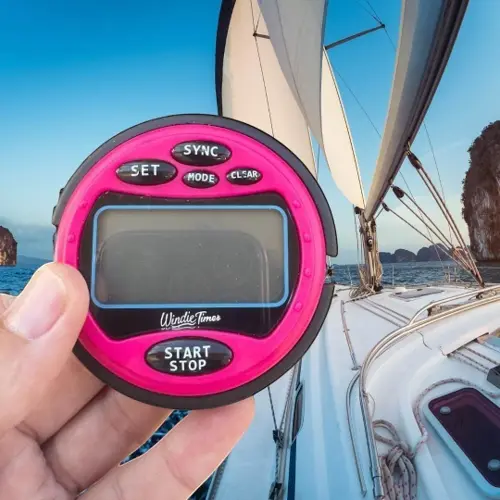
- Race timer: a main clock for the sequence and a backup on a wrist. A countdown watch like the Windie sailing timer with a sync button keeps the backup in step.
- Handheld anemometer: to check wind against class limits before each start, and for postponement calls.
- Hand bearing compass: to read wind direction and set the line square to the wind.
- Sound signals: a horn, plus a whistle as backup.
- Flags: class flags, preparatory flags (P, I, Z, U, black), AP, N, X, first substitute and others from the Racing Rules of Sailing.
- Recording tools: a waterproof notebook or tablet to log signals, times and wind readings.
At the pin end
The pin end boat watches the other end of the line. It needs a second timer synced with the committee boat, a whistle or horn for individual recalls, and often a laser rangefinder to check the line length. Windie's Pin End Kit puts these in one bag.
On the mark boats
Mark layers move marks when the wind shifts. They need a compass for bearings, an anemometer to report wind at the windward mark, and a horn. The difference between the wind at the start and at the top mark often decides whether the course needs to change. See the Mark Layer Kit.
For coaches
Coach boats use the same tools in a lighter form: a timer for practice starts, an anemometer to match drills to the breeze, and a whistle for signals. The Sailing Coach Kit bundles them.
How to choose officiating tools
- Reliability over features. A clear screen and simple buttons beat a long menu when the sequence is running.
- One hand use. Officers hold flags, radios and lines at the same time.
- Water resistance. Everything gets wet on a RIB.
- Spare parts and warranty. Clubs keep tools for years. Replaceable parts and a long warranty save money.
For a detailed list from a race officer's point of view, read race officer equipment: what you actually need on the water on windie.pro.